SCB Marine News
SCB Marine Board Statement on the 2025 UN Ocean Conference
Advancing Evidence-Based Marine Conservation Through Global Partnership
As the United Nations just convened global leaders for the 2025 Ocean Conference, the Society for Conservation Biology Marine Global Program (SCB Marine) reaffirms our unwavering commitment to supporting evidence-based and equitable marine conservation worldwide. We commend the UN’s continued leadership in fostering international collaboration to address our ocean’s most pressing challenges.
Our Shared Vision for Ocean Stewardship
SCB Marine’s mission aligns with the UN Ocean Conference agenda and the urgent imperatives of Sustainable Development Goal 14. We envision healthy, resilient marine ecosystems that support both biodiversity and the billions of people who depend on ocean resources. Our work centers on advancing scientific excellence and is driven by the conviction that conservation solutions must be inclusive, equitable, and guided by the wisdom of local communities who serve as ocean stewards.
Climate resilience cannot be achieved without healthy oceans, and healthy oceans cannot be sustained without inclusive governance that meaningfully engages coastal and Indigenous communities. We recognize that the most effective marine conservation emerges from partnerships that honor traditional ecological knowledge alongside cutting-edge science, creating solutions that are both scientifically sound and socially just.
Supporting the Global Ocean Community
Through our diverse initiatives, SCB Marine serves as a bridge between marine science and conservation action and policy. We facilitate knowledge exchange through workshops, symposia, and our flagship International Marine Conservation Congress (IMCC), bringing together researchers, practitioners, policymakers, and community leaders from around the world. Our resources and networks support early-career scientists, amplify underrepresented voices in marine conservation, and translate complex research into actionable policy recommendations.
We are committed to fostering the next generation of marine conservationists while equipping current practitioners with the tools, connections, and evidence they need to protect our shared ocean heritage. Our work extends beyond academia to engage with local communities, ensuring that conservation efforts are culturally appropriate and community-led.
A Call for Science-Policy Integration
As global leaders gather to chart the future of ocean governance, we call for stronger integration of scientific evidence into policy frameworks. Marine conservation decisions must be grounded in robust data, peer-reviewed research, and the lived experiences of those most closely connected to marine ecosystems. We stand ready to support this integration by facilitating dialogue between the scientific community and policymakers, providing accessible research syntheses, and advocating for evidence-based approaches to ocean management.
The challenges facing our oceans—from climate change and pollution to overexploitation and habitat loss—require coordinated global action informed by the best available science. SCB Marine is committed to supporting this effort by connecting research with practice, fostering international collaboration, and ensuring that marine conservation remains at the forefront of global environmental priorities.
Moving Forward Together
The UN Ocean Conference represents a critical moment for our shared blue planet. SCB Marine pledges to continue supporting our members and the broader ocean community in advancing marine conservation that is scientifically rigorous, socially equitable, and globally impactful. Together, we can build a future where thriving marine ecosystems support both biodiversity and human wellbeing for generations to come.
The Society for Conservation Biology Marine Global Program represents marine conservation professionals worldwide, working to advance the science and practice of marine biodiversity conservation through research, education, and community engagement.
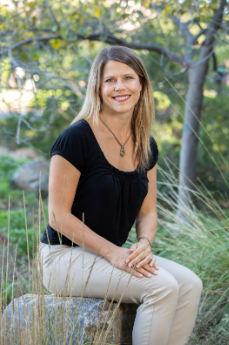
Awardee Names: Dr. Caroline Ferguson and Anne Singeo
Project Description: Palau is world renown for its extraordinary marine biodiversity and endemism. Sedimentation from recent military development threatens coastal ecosystems on two islands, Angaur and Peleliu, which creates an opportunity to mobilize environmental education of youth and local community members toward a positive end. With 11-15 Palauan high school students we have already recruited into year-round environmental education programs with local non-profit Ebiil Society, we will teach and learn about sedimentation and its impacts on the coral reefs and seagrass beds adjacent to military sites. Students will summarize learnings and findings for community members, and will be further evaluated with pre and post-tests.
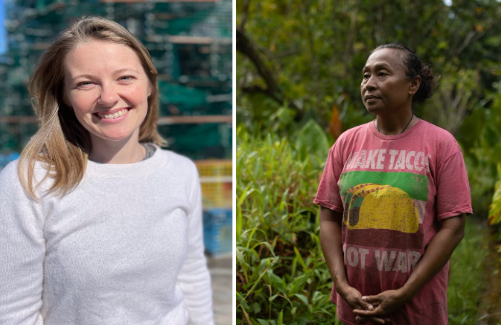
Awardee Names: Mr Harris Wei Khang
Project Description: Environmental education transcends the mere acquisition of knowledge; it forges a profound connection between humans and nature. In Malaysia, where biodiversity is rich and cultural diversity is vibrant, Rhapsody of Nature aims to revolutionize environmental education through the innovative initiative “Connecting Natural Science Through Storytelling”. This project envisions a participatory and immersive experience for young learners, using visually illustrated stories and storytelling modules rooted in folklore and local knowledge to effectively communicate environmental concepts. By engaging with stories, children are encouraged to explore the world beyond mere knowledge, fostering intrinsic motivation to love and care for nature.

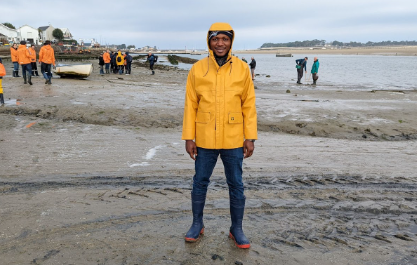
Awardee Name: Dr Abraham Ogheneruemu Ekperusi
Project Description:This project seeks to create awareness on the end-of-life disposal methods for fishing gears among fishers in Okerenkoko community. Demonstrate proper fishing gear disposal methods and improve the knowledge of local fishers towards the proper disposal of fishing gears in coastal communities.
This project will contribute to the blue economy agenda of Nigeria and the Africa Union Agenda 96 for the blue economy. It would also contribute towards the United Nations sustainable development goal 14.1 ‘life below water’ and the United Nations Decade of Action for Ocean Science.
- Awardee Name: Dr Jessica Pratt
Project Description: Seeks to disseminate educational materials and activities on ocean conservation and sustainability developed for elementary-aged youth in spring of 2023 by a team of undergraduate science and education students at the University of California, Irvine working under the direction of Dr. Jessica Pratt.
In addition to covering a comprehensive introduction to ocean conservation and sustainability, this workbook also satisfies several educational requirements for Grade 4 in the State of California, both in the Sciences and ELA/Literacy, as well as relating to the California Environmental Principles and Concepts. The specific activities and content that address each educational standard are outlined in the Teacher’s Guide we developed to accompany the workbook. While it was designed with the fourth-grade level in mind, the content likely spans the interests and abilities of multiple elementary grades.